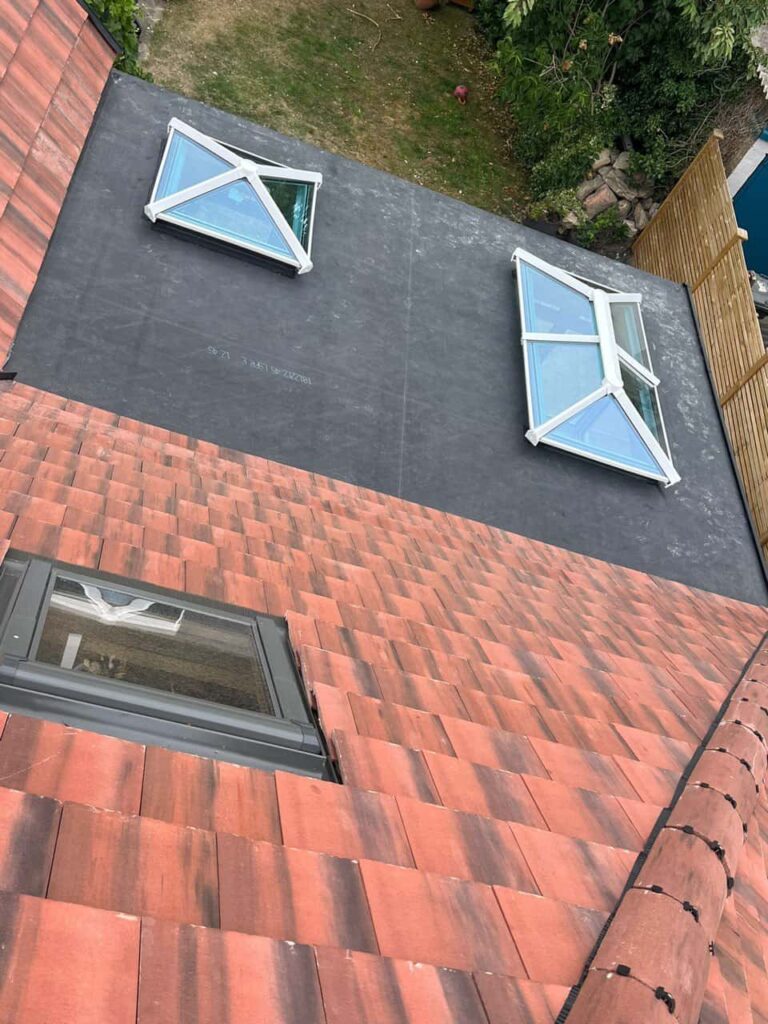
Many roofing defects begin developing long before water stains, peeling paint or dripping ceilings become visible inside a property. Tiles can shift, mortar can deteriorate and flashing can separate gradually while the underlay temporarily prevents moisture from reaching the rooms below.
For homeowners in Ollerton, Nottinghamshire, checking the roof before internal symptoms appear can help identify manageable defects at an earlier stage. It also provides a clearer picture of the roof’s general condition rather than waiting for a leak to reveal that something has already failed.
The Benefits of Identifying Roof Problems Early
External Damage Often Develops First
The outer roof covering receives continuous exposure to rain, wind and temperature changes. This can gradually affect tiles, slates, fixings, mortar and metal details.
Early signs may include:
- cracked or displaced tiles
- loose ridge or hip materials
- gaps around flashing
- deteriorated chimney mortar
- blocked roof valleys
- debris collecting in gutters
- uneven sections of the roof covering
These defects may not immediately cause an indoor leak, but they can make the roof increasingly vulnerable during future weather.
The Underlay Can Conceal a Developing Problem
Roofing underlay provides secondary protection beneath tiles or slates. If rain passes through a small opening in the covering, the underlay may continue directing it towards the roof edge.
This can delay visible indoor symptoms and give the impression that the roof remains fully sound. However, repeated moisture exposure may eventually weaken the underlay, battens or nearby timbers. By the time a ceiling stain appears, the affected area may be larger than the original defect.
Small Defects Can Affect Surrounding Materials
A single loose tile may initially appear to be an isolated concern. If it allows wind and rain beneath the covering, neighbouring tiles, fixings and timber supports can also become affected.
Likewise, a small opening in flashing can direct water behind otherwise serviceable roofing materials. Early assessment allows the immediate defect and its surrounding area to be checked together.
Roof Checks Can Reveal Weather-Related Movement
Strong winds do not always remove tiles completely. They may lift the lower edge, loosen a fixing or move a tile slightly out of alignment. These changes can be difficult to identify from the ground.
An inspection after periods of severe weather can reveal movement before the next rainfall exposes the weakness. Roof edges, ridges, verges and chimney details are particularly important because they often experience greater wind pressure.
Drainage Problems May Begin Without an Indoor Leak
Roof valleys, gutters and outlets are designed to carry water away efficiently. Leaves, moss and fragments of roofing material can obstruct these routes and cause water to collect where it should not.
Overflowing or slow-draining rainwater can affect roof edges, fascia boards and adjoining surfaces without immediately producing an internal stain. Keeping drainage components clear helps reduce unnecessary moisture exposure.
Early Inspection Supports Targeted Repairs
When damage is identified before it spreads, the required work may remain focused on a specific tile, flashing detail or section of mortar. This allows the repair to address the source while the surrounding materials are still serviceable.
If inspection is delayed until several components have deteriorated, it can become more difficult to separate the original problem from the secondary damage it has caused.
It Provides a Better Understanding of Roof Condition
Not every weathered roof requires extensive work. Surface ageing may be expected, while certain defects need more immediate attention.
A professional inspection distinguishes normal wear from issues that affect weather resistance or stability. The roofer should assess the covering, ridges, valleys, flashing, chimney details, rainwater components and any accessible materials inside the roof space.
This evidence-based approach helps avoid unnecessary work while ensuring genuine defects are not overlooked.
When Is a Roof Check Worth Arranging?
A roof inspection may be particularly useful:
- after strong winds or prolonged rainfall
- when tiles or mortar fragments are found on the ground
- if the roof has not been checked for a considerable period
- when buying or planning improvements to a property
- after nearby branches have contacted the roof
- when gutters repeatedly contain roofing debris
- if previous repairs are beginning to deteriorate
These situations do not necessarily mean that serious damage exists. They simply provide a sensible reason to confirm the roof remains secure.
Why Ground-Level Checks Have Limitations
Homeowners can look for obvious gaps, displaced materials and overflowing gutters from a safe position. However, many defects are concealed by overlapping tiles or occur around junctions that cannot be viewed clearly from below.
Attempting to climb onto a roof without suitable training and equipment is unsafe and may cause further damage. A professional roofer can inspect vulnerable areas closely and explain whether maintenance or repair is required.
Conclusion
Checking a roof before problems appear indoors can reveal loose materials, deteriorated flashing, obstructed drainage and weather-related movement at an earlier stage. It can also prevent the underlay from concealing a defect until moisture has affected a wider area.
If you would like the condition of your roof assessed in Ollerton, Nottinghamshire, contact Ollerton Roofing Repairs. Our team can carry out a thorough inspection and recommend appropriate work based on what the roof genuinely needs.
Call us on: 01623 700 885
Click here to find out more about Ollerton Roofing Repairs
Click here to complete our contact form and see how we can help with your roofing needs.