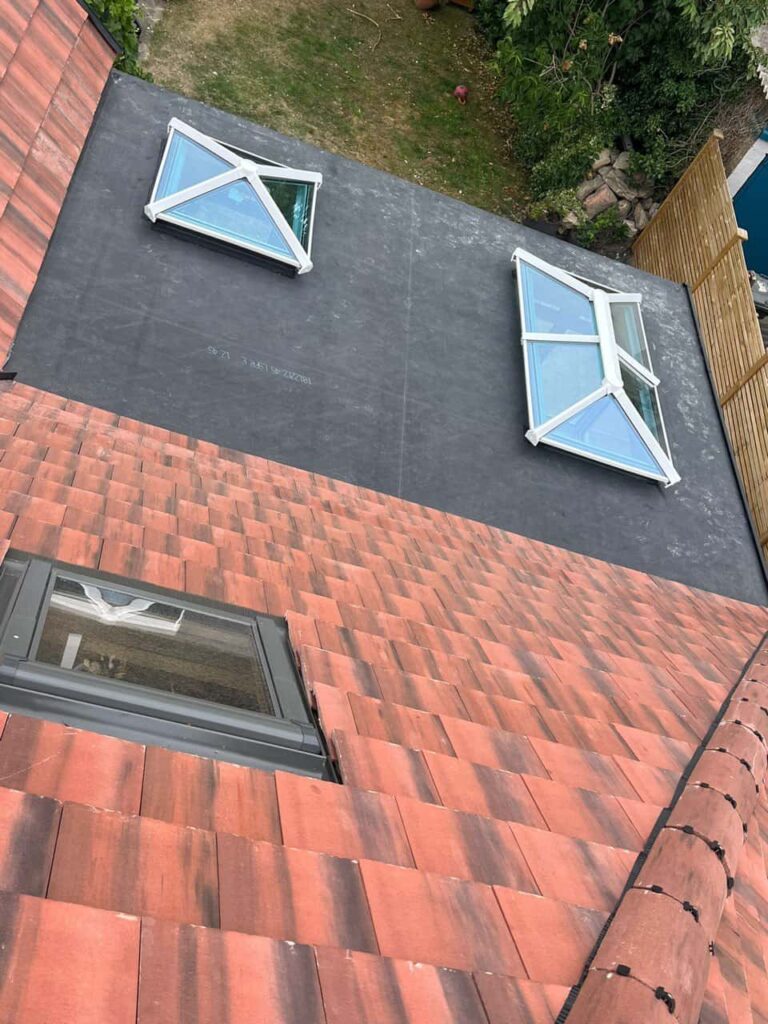
Roof tiles are designed to withstand normal weather exposure, but they depend on sound fixings, secure battens and correct installation to remain in place. When wind reaches the roof at speed, it can create pressure around the edges and beneath parts of the covering.
A tile does not always blow off immediately. It may lift slightly, move out of alignment or become loose before gradually slipping down the roof. Understanding how this happens helps explain why apparently minor movement should be assessed promptly.
Why Wind Can Displace Roof Tiles
Wind behaves differently as it travels around a building. It can accelerate over the roof, create turbulence at exposed edges and force air beneath any existing gaps. The condition of the roofing materials determines how well they resist these forces.
Wind Creates Lifting Pressure
As wind passes across the roof, differences in air pressure can create an upward lifting force. Tiles that are properly fitted and secured are designed to resist this movement.
If a tile is already slightly loose, wind can lift its lower edge and reduce its contact with the tiles beneath. Repeated lifting may weaken the fixing or move the tile away from its intended position.
The roof may look normal from ground level after the weather settles, even though a tile has become less secure.
Roof Edges Are Particularly Exposed
Tiles around verges, eaves, hips and ridges often experience greater wind pressure than those in sheltered central areas. These locations sit close to changes in the roof’s shape, where airflow can become turbulent.
A weakness at the edge can allow wind to reach beneath neighbouring tiles. Once one unit moves, the exposed gap may place additional pressure on the materials around it.
This is why a small amount of displacement at a verge or ridge deserves attention before further weather causes the affected area to open.
Corroded or Loose Fixings Provide Less Resistance
Roof tiles may be held with nails, clips or other suitable fixings. Over time, metal components can corrode, loosen or become ineffective.
A fixing may appear adequate during calm conditions but fail when exposed to stronger wind pressure. The tile can then slide down the batten or move sideways.
Pushing the tile back into place will not provide a reliable repair if its fixing has failed. The affected material must be secured correctly, and nearby fixings should be checked where appropriate.
Damaged Tile Nibs Can Cause Slipping
Some roof tiles have nibs on their underside that help them hang from the battens. These projections are concealed once the tile is installed, so damage may not be visible from outside.
Wind movement can place strain on a cracked or weakened nib. If it breaks, the tile may lose support and begin to slip even though its visible face remains intact.
A close inspection is needed to check the concealed edges and determine whether the tile can be refitted or requires replacement.
Weak Battens Can Release Several Tiles
Battens provide support for the roof covering and hold its fixings. If timber has become damp, decayed or damaged, it may no longer retain nails or clips securely.
Wind can expose this weakness by moving several nearby tiles at once. Reattaching individual tiles without repairing the batten may lead to the same problem returning.
Where multiple tiles have shifted in one area, the condition of the supporting timber should form part of the assessment.
Existing Gaps Allow Wind Beneath the Covering
Tiles must overlap correctly to form a consistent weather-resistant surface. Poor alignment, earlier repairs or gradual roof movement can create gaps through which air enters.
Once wind reaches beneath a tile, it can exert pressure from below. This may lift the tile, damage its fixing or enlarge the opening.
The fault may therefore involve more than the single tile that has visibly moved. Adjacent tiles should also be checked for spacing, alignment and secure fixing.
Ridge and Verge Deterioration Can Affect Nearby Tiles
Mortar and mechanical fixing systems help secure exposed roof details. If mortar has cracked or separated, ridge and verge materials may begin to move during windy conditions.
That movement can affect surrounding tiles and create new entry points for rain. Pieces of mortar found in gutters or around the property may be an early indication that an exposed roof edge needs attention.
A professional inspection can establish whether local repair is sufficient or whether a larger section requires reinstatement.
Damage Can Develop Gradually
A tile may not slip during the strongest gust. Wind can loosen it slightly, leaving gravity, vibration and later weather to complete the movement.
This explains why a displaced tile may only become noticeable days after windy conditions. It also means that the absence of fallen tiles does not confirm that the roof has escaped damage.
Subtle changes in alignment are worth checking, particularly where the roof has older materials or a history of movement.
Signs Wind May Have Loosened Roof Tiles
After strong winds, look from ground level for:
- Tiles sitting lower than neighbouring ones
- Uneven courses or widened gaps
- Tiles that appear lifted at one edge
- Broken materials on the ground
- Mortar fragments in gutters or around the property
- Exposed underlay
- New damp patches indoors
- Rattling or movement during windy conditions
Avoid climbing onto the roof, as a displaced tile may be unstable and nearby materials could also have loosened.
Why Prompt Repair Matters
A slipped tile can expose the underlay and battens to moisture. Rain may also travel beneath adjoining tiles, causing an internal leak some distance from the original gap.
Prompt repair allows the roofer to identify why the tile moved and check whether the defect extends beyond the visible area. Suitable work may involve replacing the tile, renewing its fixing, repairing the batten or correcting a wider alignment problem.
Conclusion
Wind can cause roof tiles to slip by creating lifting pressure, entering beneath existing gaps or exposing weaknesses in fixings, nibs and battens. Roof edges and previously deteriorated areas are often particularly vulnerable.
A proper repair should address the reason for the movement rather than simply pushing the tile back into position. If you have noticed displaced or uneven roof tiles in Ollerton, Nottinghamshire, Ollerton Roofing Repairs can inspect the affected area and recommend an appropriate solution. Contact the team to arrange a professional roof assessment.
Call us on: 01623 700 885
Click here to find out more about Ollerton Roofing Repairs
Click here to complete our contact form and see how we can help with your roofing needs.