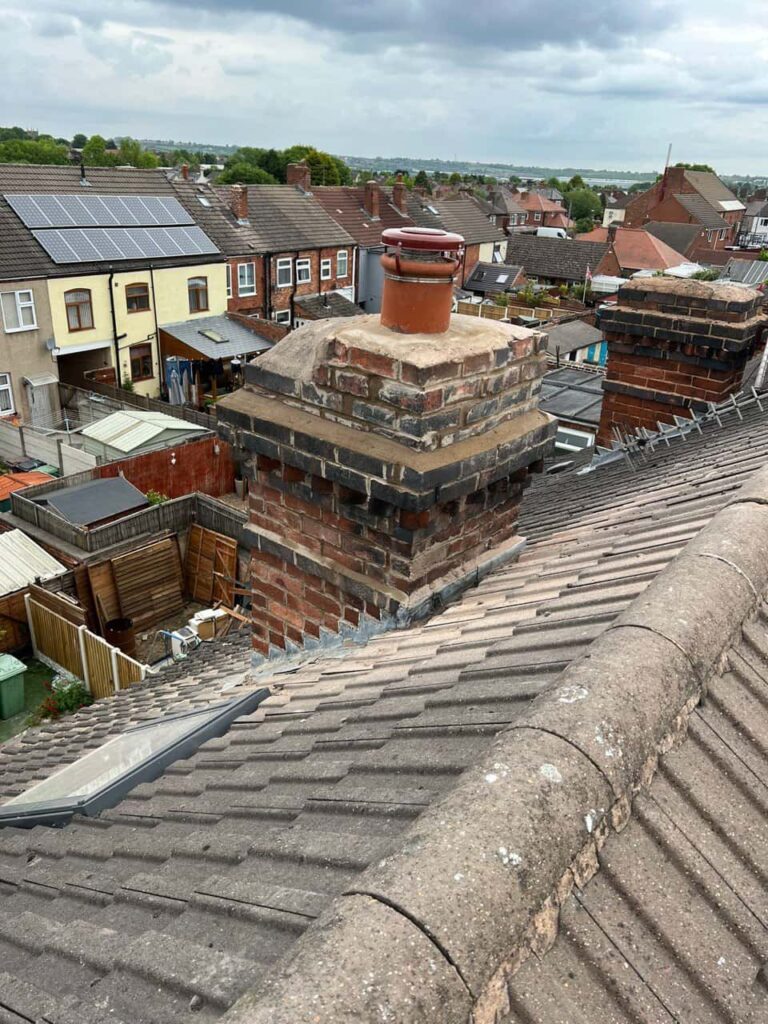
One slipped roof tile can be enough to allow water into a property. Roof tiles are installed in an overlapping arrangement that directs rainwater down the slope. When a tile moves out of position, it can create a gap that exposes the underlay and supporting components beneath.
The problem may not produce an immediate ceiling leak because the underlay can provide temporary protection. However, continued exposure to rain and wind can eventually allow moisture to reach the roof space and internal finishes. For homeowners in Ollerton, Nottinghamshire, a slipped tile should therefore be inspected promptly rather than left until visible water damage appears.
How a Single Slipped Tile Can Affect the Roof
Although one displaced tile creates only a small opening, rainwater does not need a large gap to enter the roof. Wind-driven rain can travel beneath neighbouring tiles and reach materials that are not intended to remain directly exposed.
The amount of damage depends on the tile’s position, the condition of the underlay and how long the defect remains unresolved.
The Underlay May Provide Only Temporary Protection
Roofing underlay acts as a secondary barrier beneath the tiles. If it remains intact, it may direct some water towards the eaves and prevent an immediate leak.
However, underlay can deteriorate with age. It may contain small tears, gaps around fixings or sections that have become brittle. Once directly exposed through a missing or displaced tile, these weaknesses can allow water to pass into the roof structure.
The absence of an indoor damp patch does not confirm that the underlay is still performing correctly.
Water Can Travel Away From the Opening
The position of internal water damage may not match the location of the slipped tile. Moisture can run along the underlay, battens, rafters or other roof components before dripping onto insulation or a ceiling.
This means a stain may appear several metres from the original entry point. It can also make the cause difficult to identify without inspecting both the external covering and the roof space.
Accurate leak detection is important because repairing the area above the stain may not address the actual defect.
Insulation Can Conceal Early Water Entry
Water entering the roof may be absorbed by insulation before it becomes visible below. This can delay the appearance of a ceiling stain while allowing moisture to remain within the roof build-up.
Signs of concealed water entry can include:
- Damp or compressed insulation
- Dark marks on roof timbers
- Moisture around battens
- A musty smell in the roof space
- Discolouration that appears after rainfall
- Peeling or bubbling internal paint
By the time these signs become obvious, the leak may have been present for some time.
Wind Can Worsen the Original Defect
A displaced tile can disturb the protective overlap of the surrounding roof covering. Wind may enter beneath the raised edges and place additional pressure on nearby tiles.
If fixings or battens have already deteriorated, adjoining tiles may also begin to move. A defect that started with one tile can then affect a wider section of the roof.
This is why an inspection should cover the surrounding area rather than focusing only on the most visible tile.
The Location of the Tile Matters
Some parts of a roof are more vulnerable to water entry than others. A slipped tile near a valley, chimney, verge, roof window or adjoining wall can expose an area where several materials meet.
Water already concentrates around some of these details, so even a small opening may have a significant effect. Tiles near the eaves can also allow moisture to reach fascia boards, soffits or the lower edge of the underlay.
The urgency should be judged by the tile’s position and the condition of nearby roofing components.
Why Did the Tile Slip?
A tile can remain unbroken but move because its fixing has failed. Possible causes include:
- Corroded nails or clips
- A damaged tile nib
- Deteriorated timber battens
- Strong winds
- Movement within the roof covering
- Poorly secured previous work
- Accidental impact
Simply returning the tile to its original position may not provide a reliable repair if its support or fixing remains defective.
A professional roofer can identify the cause and check whether neighbouring tiles have the same weakness.
When Does the Problem Need Urgent Attention?
All slipped tiles should be assessed promptly, but the need becomes more immediate when:
- Heavy rain or strong winds are expected
- The underlay is visibly torn or exposed
- Damp marks have appeared indoors
- More tiles are beginning to move
- The loose tile could fall from the roof
- The defect is near a roof junction
- Water is dripping into the property
Avoid attempting to climb onto the roof. A loose tile and wet roof surface can make access unsafe.
What Does a Proper Repair Involve?
If the surrounding roof remains sound, one slipped tile can often be dealt with through a localised repair. The work may involve repositioning or replacing the tile and securing it correctly.
The roofer should also inspect:
- The condition of the tile
- Its fixings and supporting batten
- The underlay beneath it
- Adjacent tiles and their alignment
- Nearby flashings or junctions
- Signs of moisture within the roof space
If the inspection reveals deterioration beyond the immediate area, additional work may be recommended to restore reliable protection.
Do Not Wait for a Ceiling Stain
A visible stain is a late sign of water movement. Moisture must first pass through the roof covering and reach the internal ceiling, which means concealed materials may already be affected.
Arranging an inspection when the displaced tile is first noticed gives the best opportunity to keep the repair localised. It also reduces the risk of the tile moving further during poor weather.
Conclusion
One slipped roof tile can cause water damage by exposing the underlay and allowing rain to reach the roof structure. The leak may not become visible immediately because water can travel away from the opening or remain concealed within insulation.
Ollerton Roofing Repairs provides professional slipped tile and roof leak repairs throughout Ollerton, Nottinghamshire. If you have noticed a tile out of position, contact us to arrange an assessment before the defect develops into a wider problem.
Call us on: 01623 700 885
Click here to find out more about Ollerton Roofing Repairs
Click here to complete our contact form and see how we can help with your roofing needs.